Crown Lengthening: Procedure, Benefits, Risks, and Costs
Are you considering a dental crown, but your dentist recommended crown lengthening first? Or have you been told you need this procedure to improve your smile? At Tirana Dental Center, we’re committed to helping you understand every step of your dental journey. This guide explains what crown lengthening is, why it’s performed, what to expect, and how it can benefit your oral health and confidence.
What Is Crown Lengthening?
Crown lengthening is a common periodontal procedure that removes excess gum tissue—and sometimes a small amount of bone—to expose more of your tooth’s surface above the gum line. This treatment is often necessary when there isn’t enough visible tooth to support a dental crown or filling, or when you want to correct a “gummy smile.”
Why Is Crown Lengthening Performed?
Restorative needs: To allow proper placement of a crown, veneer, or filling when decay or damage extends below the gum line.
Aesthetic improvement: To correct excessive gum display (a “gummy smile”) and achieve a more balanced, attractive smile.
Periodontal health: To preserve healthy gum and bone architecture, reducing the risk of chronic inflammation.
Access to subgingival caries or fractures: To treat tooth decay or fractures that occur below the gum margin.
Example: If a tooth breaks near the gum line, crown lengthening exposes more tooth structure so a crown can be securely placed.
Understanding Biologic Width
The biologic width is the space (about 2 mm) between the base of your gum pocket and the underlying bone. Respecting this space is crucial—if a restoration invades the biologic width, it can cause chronic inflammation or bone loss. Crown lengthening ensures enough space for healthy, long-lasting dental work.
Types of Crown Lengthening
Esthetic Crown Lengthening: Improves the appearance of your smile by reshaping the gum line.
Functional/Restorative Crown Lengthening: Provides access to more tooth structure for proper crown or filling placement.
Orthodontic Crown Lengthening: Occasionally used with orthodontic treatments to increase visible tooth length.
When Is Crown Lengthening Indicated?
You have a tooth with deep decay or a fracture below the gum line.
Your teeth are too short for a crown or veneer to fit securely.
You need a “ferrule effect”—a certain amount of natural tooth above the gum line—to strengthen a dental crown.
You want to correct a gummy smile or improve gum-to-tooth ratio.
Your restoration margins (edges of crowns or fillings) are below the gum line and causing irritation.
Who Should Not Have Crown Lengthening? (Contraindications)
Removing gum or bone would compromise the tooth’s stability (poor crown-to-root ratio).
There’s a high risk of gum recession in the front teeth, which could affect your smile’s appearance.
You have untreated gum disease—periodontal health must be stabilized first.
You have systemic health issues (like uncontrolled diabetes or bleeding disorders) that increase surgical risks.
Tools and Techniques Used in Crown Lengthening
Dentists at Tirana Dental Center use advanced tools for precise, comfortable results, including:
Traditional scalpel surgery
Laser-assisted techniques (such as diode or Er:YAG lasers) for soft tissue and bone contouring
Rotary burs or piezosurgery for bone reshaping
Sutures and periodontal dressing for optimal healing
Can Lasers Be Used for Crown Lengthening?
Yes! Laser crown lengthening offers several advantages:
Less bleeding during the procedure
Faster healing and reduced discomfort
Precise tissue removal for better esthetic results
What Are the Steps of the Crown Lengthening Procedure?
Clinical and radiographic assessment
Local anesthesia to ensure comfort
Incision and gentle lifting of the gum tissue
Removal of excess gum tissue (and bone, if needed)
Shaping the area for a natural appearance
Irrigation, suturing, and placement of a protective dressing
Post-operative instructions and follow-up care
How Long Does Crown Lengthening Take?
The procedure usually takes 30 to 90 minutes, depending on the number of teeth involved and whether bone needs to be removed.
Recovery After Crown Lengthening: What to Expect
Soft tissue healing: 1–2 weeks
Bone and tissue stabilization: 6–12 weeks
Restorative work: Typically scheduled after full healing
You may experience mild discomfort, swelling, or bleeding, which can be managed with prescribed medications and gentle care.
Post-Operative Care Instructions
Rinse with chlorhexidine mouthwash as directed
Take pain relievers if prescribed
Eat soft foods and avoid chewing on the surgical site
Keep the area clean, but avoid brushing directly over the wound
If you have concerns about pain or healing, contact us right away.
Benefits of Crown Lengthening
Makes dental crowns, fillings, or veneers possible on teeth that otherwise couldn’t be restored
Improves gum health and prevents chronic inflammation
Enhances smile esthetics by correcting a gummy smile
Increases the retention and longevity of dental restorations
Risks and Potential Complications
Like any surgical procedure, crown lengthening carries some risks:
Gum recession, especially in the front teeth
Increased tooth sensitivity
Temporary discomfort or swelling
Rarely, infection or delayed healing
Your dentist will discuss these risks and how they apply to your individual case.
Cost of Crown Lengthening
The price of crown lengthening varies based on the number of teeth, complexity, and technique used. At Tirana Dental Center, we provide transparent pricing and personalized quotes after an initial assessment. For specific cost information, visit our Contact page or message us on WhatsApp.
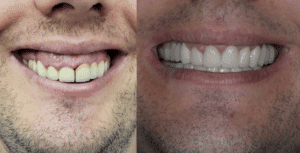
Crown Lengthening Before and After
Many patients are delighted with their results—whether it’s restoring a broken tooth or achieving a more confident, attractive smile. Ask your dentist for before and after photos to see real-world crown lengthening results.
Have More Questions About Crown Lengthening?
Our experienced team, led by Dr. Ardian Skendaj, is here to help. Whether you’re wondering if crown lengthening is necessary for your situation, want to know about alternatives, or just have questions about recovery, we’re happy to offer guidance and support.